
Available on these platforms: Spotify | Anchor | Apple | PocketCasts
Available on these platforms: Spotify | Anchor | Apple | PocketCasts
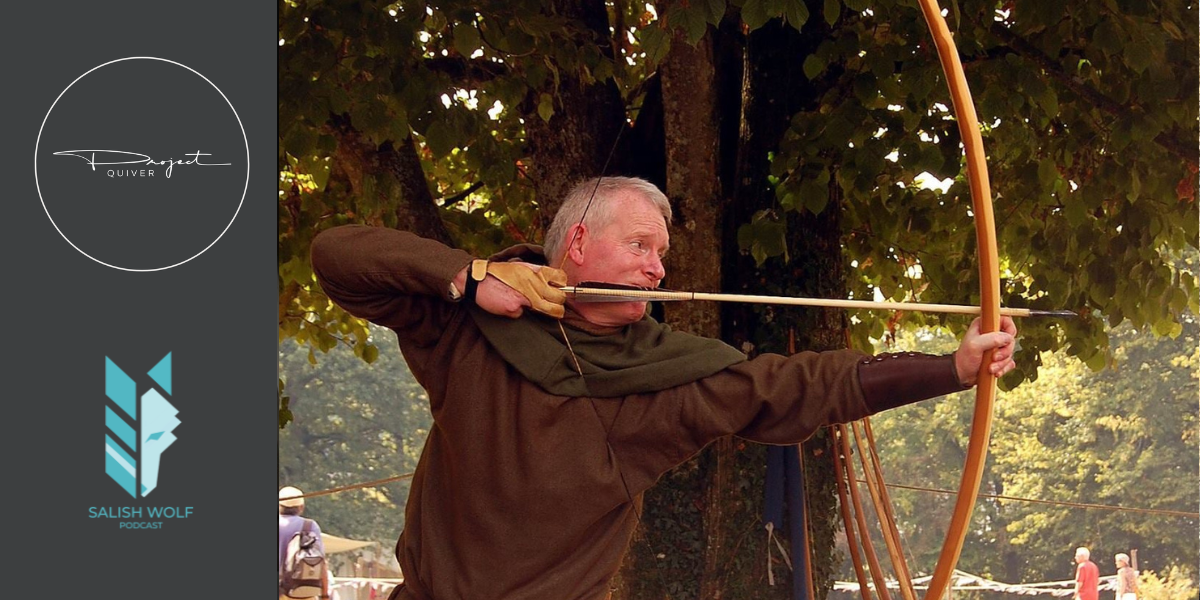
David Pim is a retired molecular biologist living in Trieste, Italy, where he has also been a bowyer for more than 20 years. David has made many types of bows but is particularly fascinated by the design and functionality of the English longbow and warbows.
“They [warbows] were only a temporary weapon. They weren’t the kind of weapon that you handed down to your kids.”
Please enjoy this episode of Project Quiver on Salish Wolf with David Pim.
Episode Links:
Project Quiver at Anchor Point Expeditions
Summary:
Todd interviews David Charles Pim, a retired molecular virologist who spent about 20 years making traditional longbows and studying historic archery. Pim explains how original Mary Rose bows informed his designs, why wood choice and tillering matter, and shares practical insights on shooting heavy bows, historic equipment, and medieval bow-making trades.
Show Notes:
Pim spent around 40 of his 42 working years studying human papillomaviruses, including types linked to cervical and other cancers.
After taking up archery in the late 1990s, Pim moved from Olympic-style recurve to instinctive longbow shooting and historic archery.
He made roughly 90 bows over about 20 years, mostly Tudor-style full-compass longbows, and sold nearly all as commissions.
Access to original Mary Rose bows changed his understanding of their D-shaped profiles, lengths, and circular tiller, which distributes stress and wear along the limbs.
European yew was his preferred bow wood, but permits, harvesting difficulty, and the retirement of his Italian supplier made good timber hard to obtain; he also discusses hazel, ash, and dogwood.
Pim’s heaviest bow was 140 pounds; his own maximum shooting draw was 118 pounds at 32 inches, and he described using a hard hat while tillering bows that could fail.
He explains side nocks, historic string materials including hemp, the scarcity of surviving equipment evidence, and the likely division of labor among bowyers, apprentices, and horn workers.
His practical shooting advice includes raising the nocking point, using a relaxed bow hand, and coordinating push and pull when drawing a heavy bow.
Chapters:
00:00 Life in Trieste and a career in molecular virology
01:59 Why Pim slowed bow making and lost access to yew
05:57 Local woods, historic archery, and Trieste’s landscape
10:55 HPV research
13:28 From modern recurve to Tudor longbow making
18:05 What handling Mary Rose bows revealed about design
23:12 Why long warbows needed length and eventually wore out
25:06 Tillering 140-pound bows and the physical demands
27:59 Archery, asymmetry, and the bodies of heavy-bow shooters
32:30 Medieval bowyers, workshops, horners, and production
35:54 Side nocks, historic strings, and surviving evidence
45:31 Nocking points, wrist guards, and a relaxed bow hand
54:30 Heavy-bow draw technique and historical shooting images
58:42 Tools, wood handling, and making a beautiful functional bow
01:08:02 Pim’s side nocks and the state of bow making in Italy
01:16:02 European travel, trains, and the Bowyers Dispatch
01:21:34 Why Pim kept bow making a private craft
