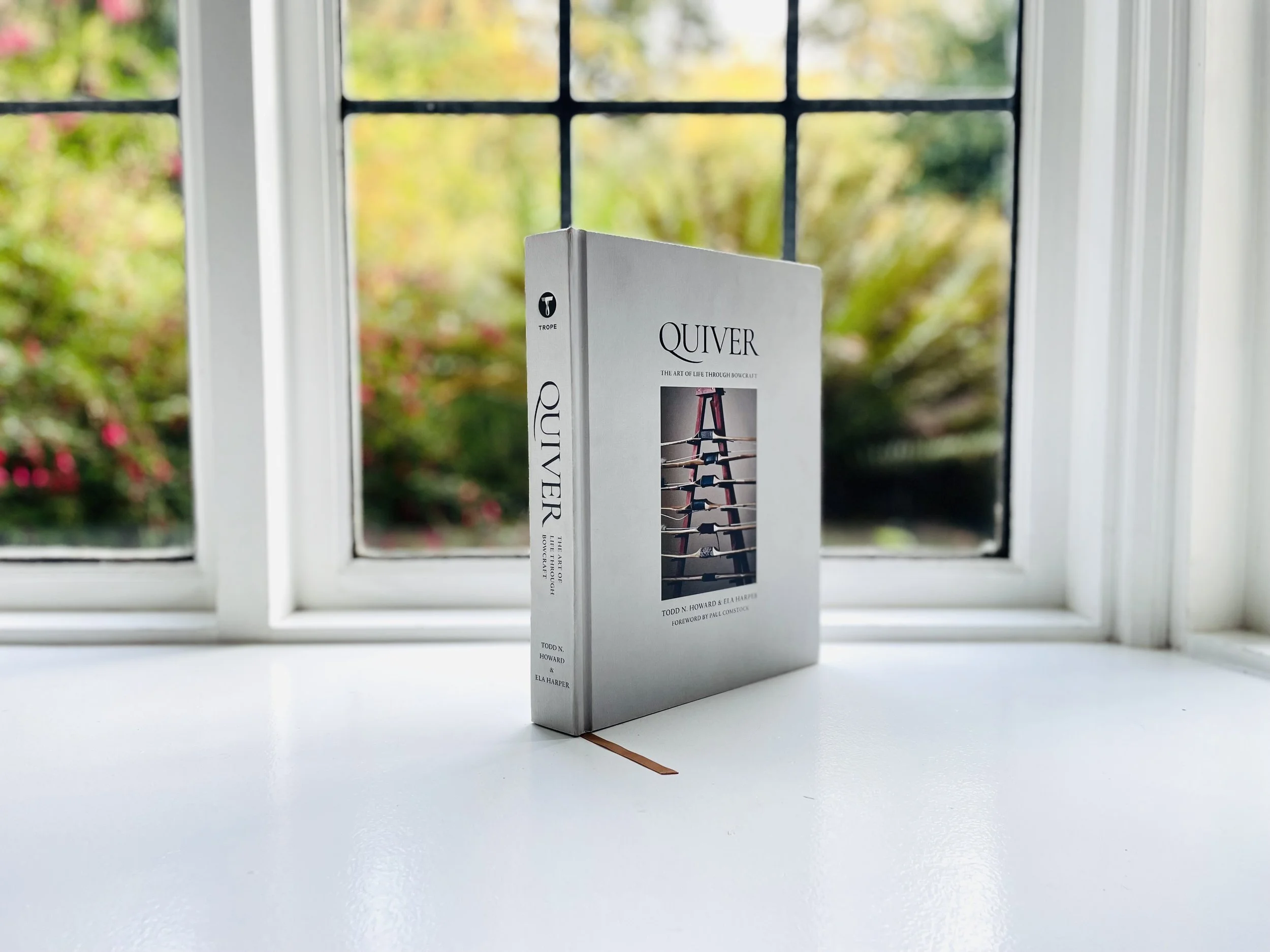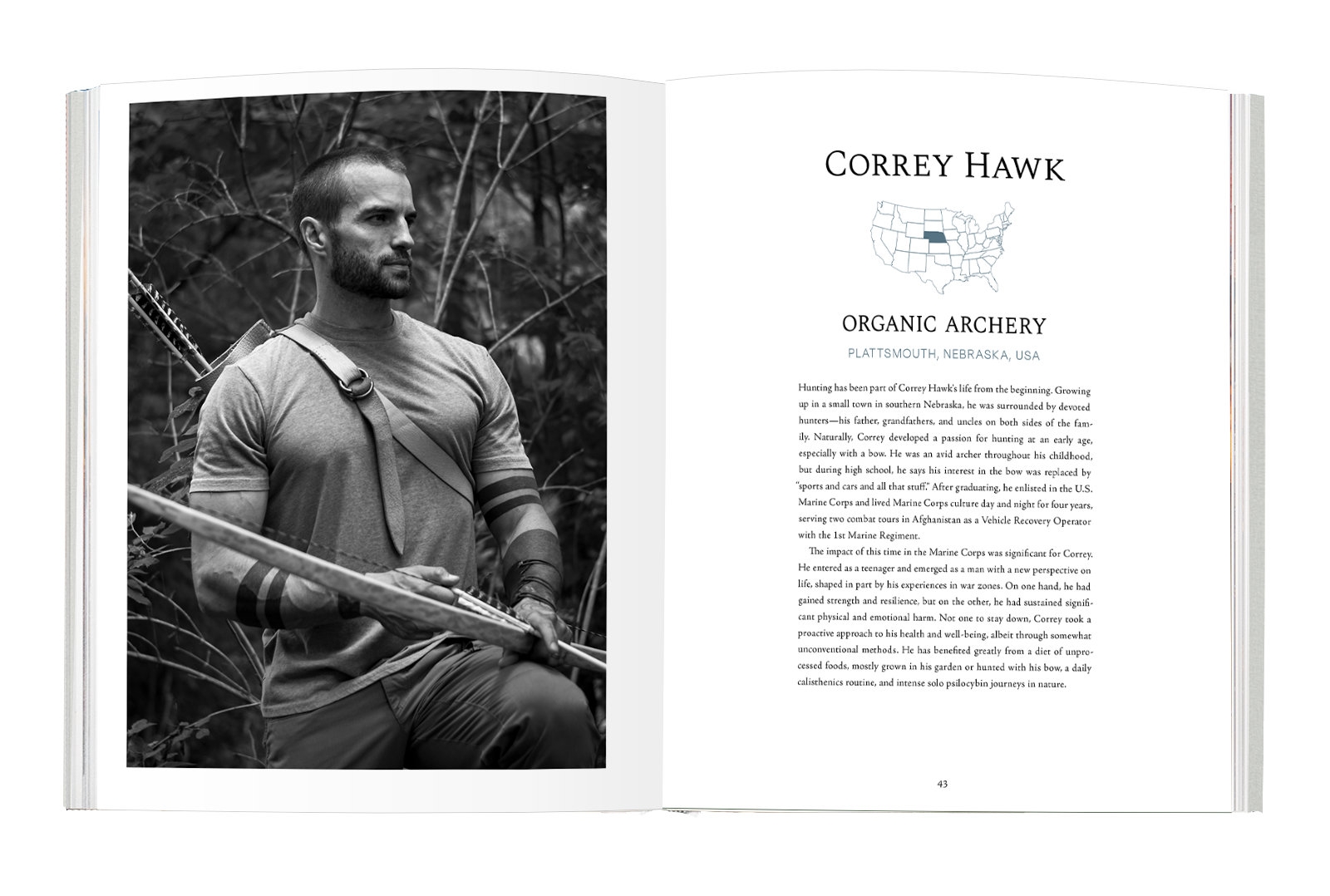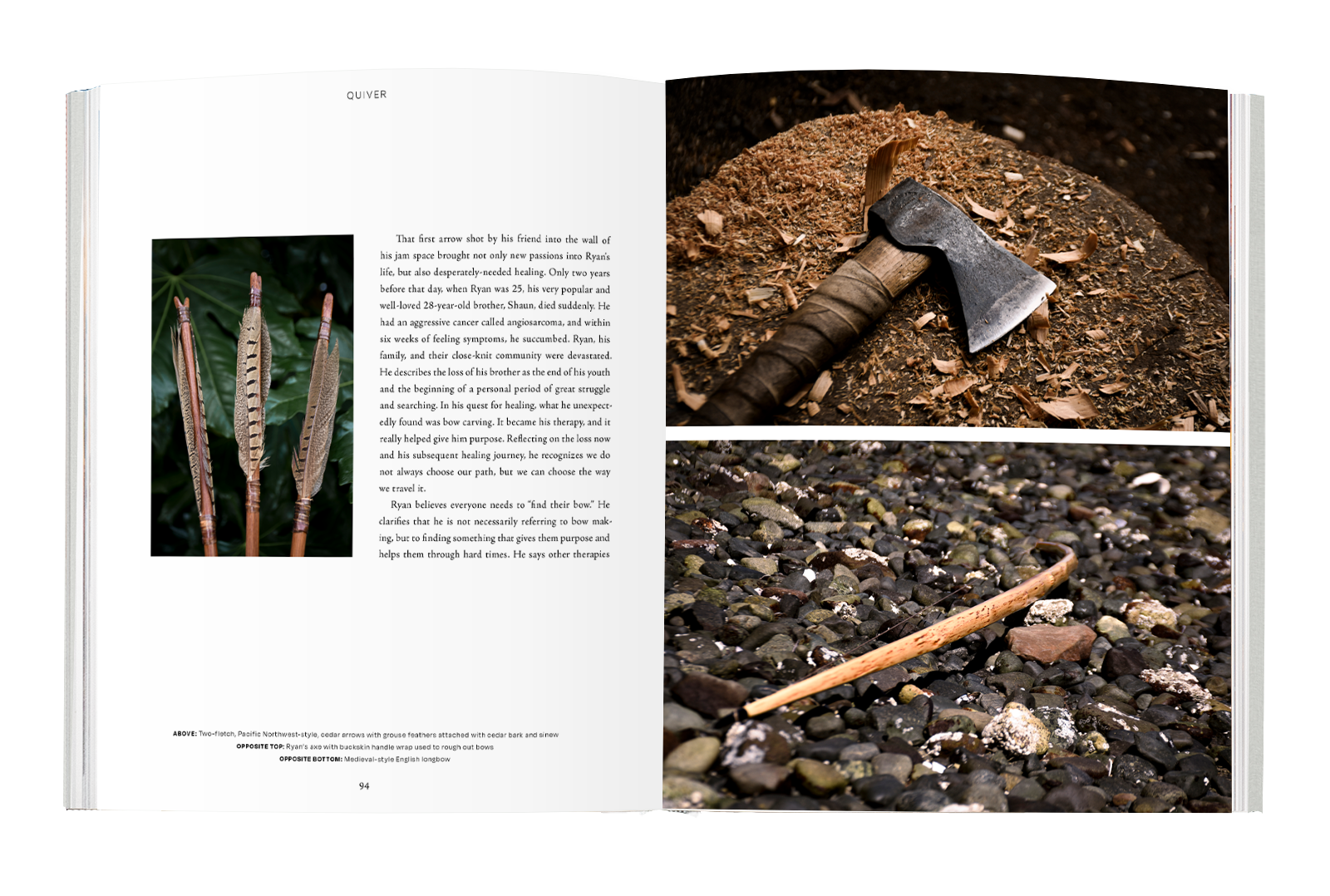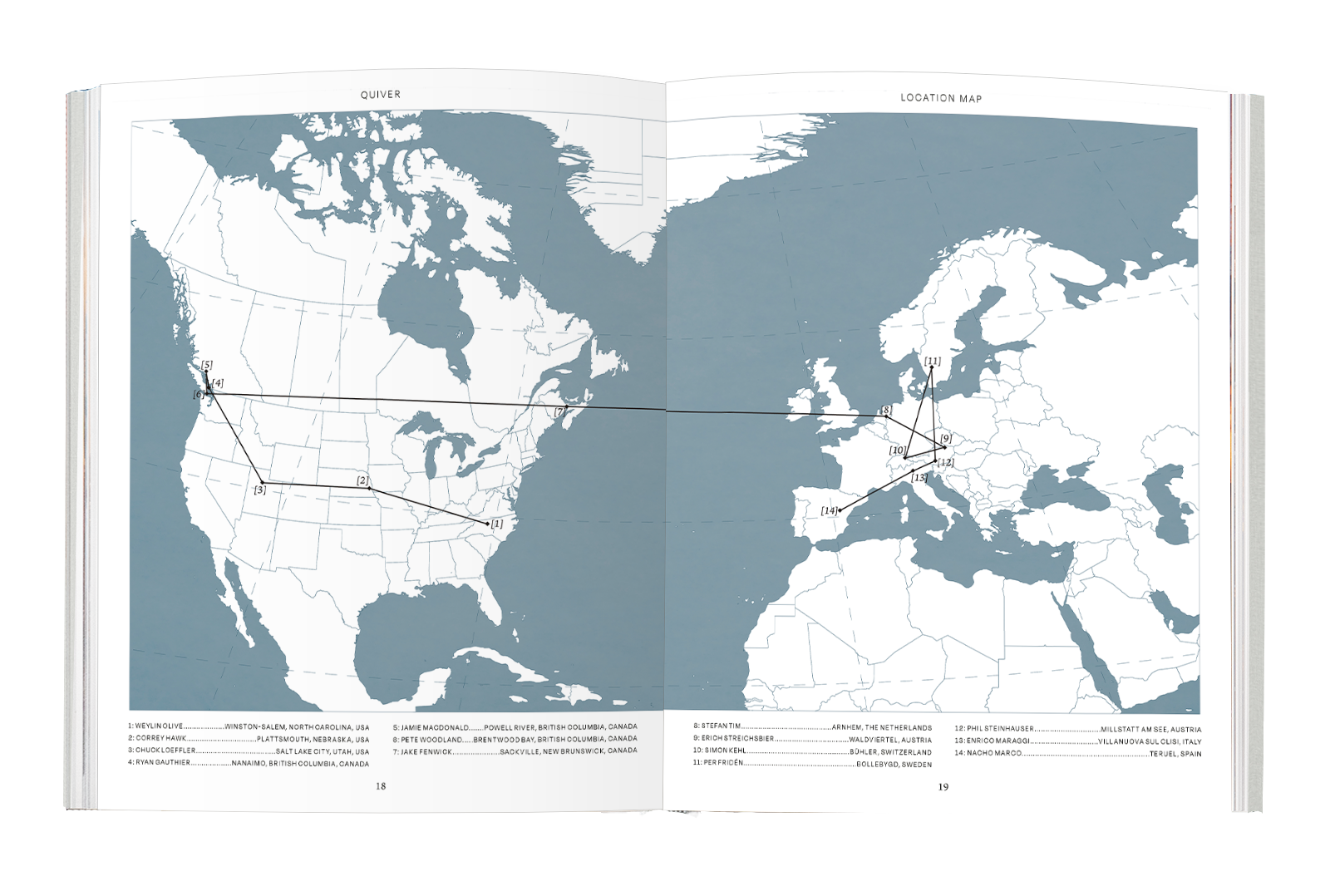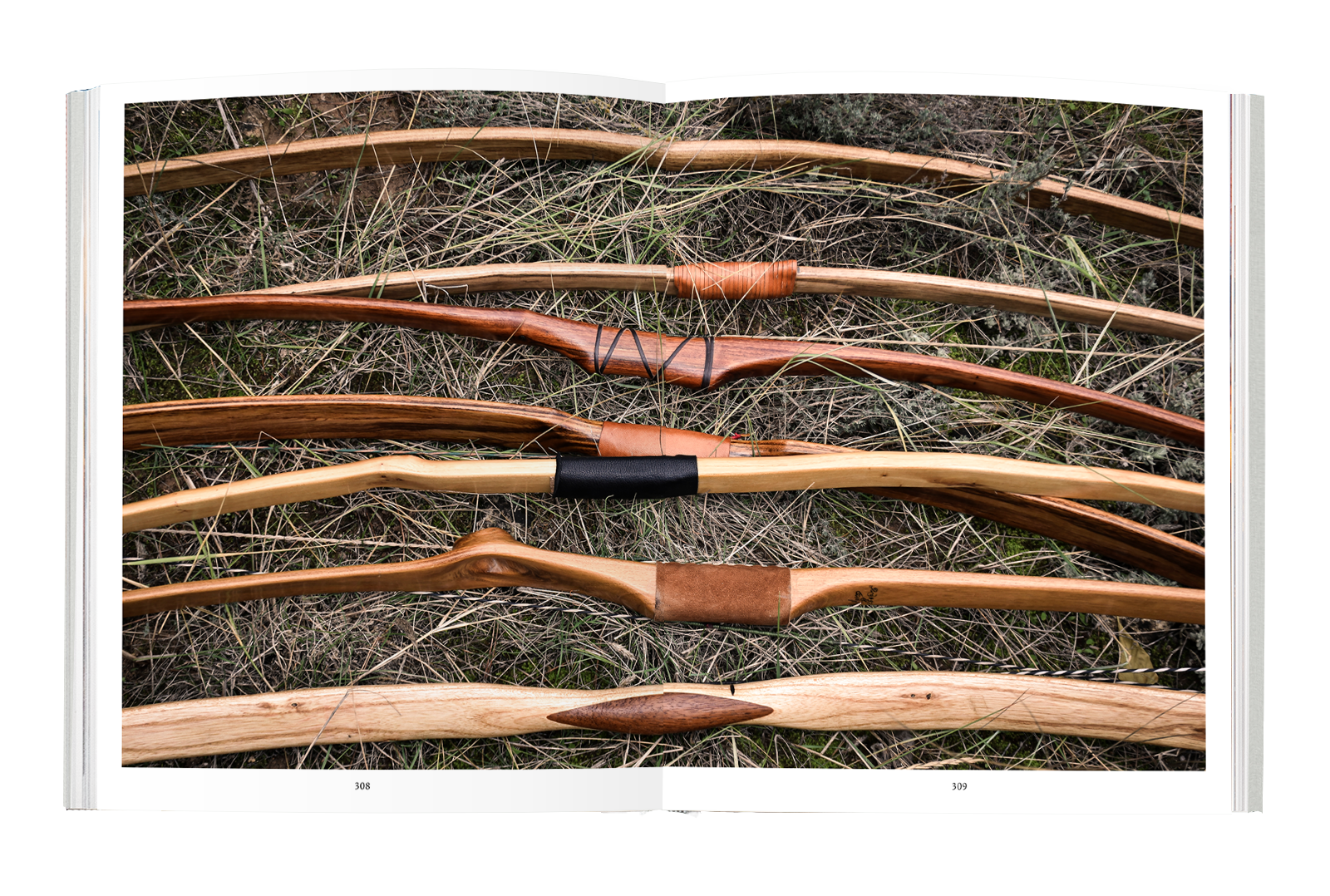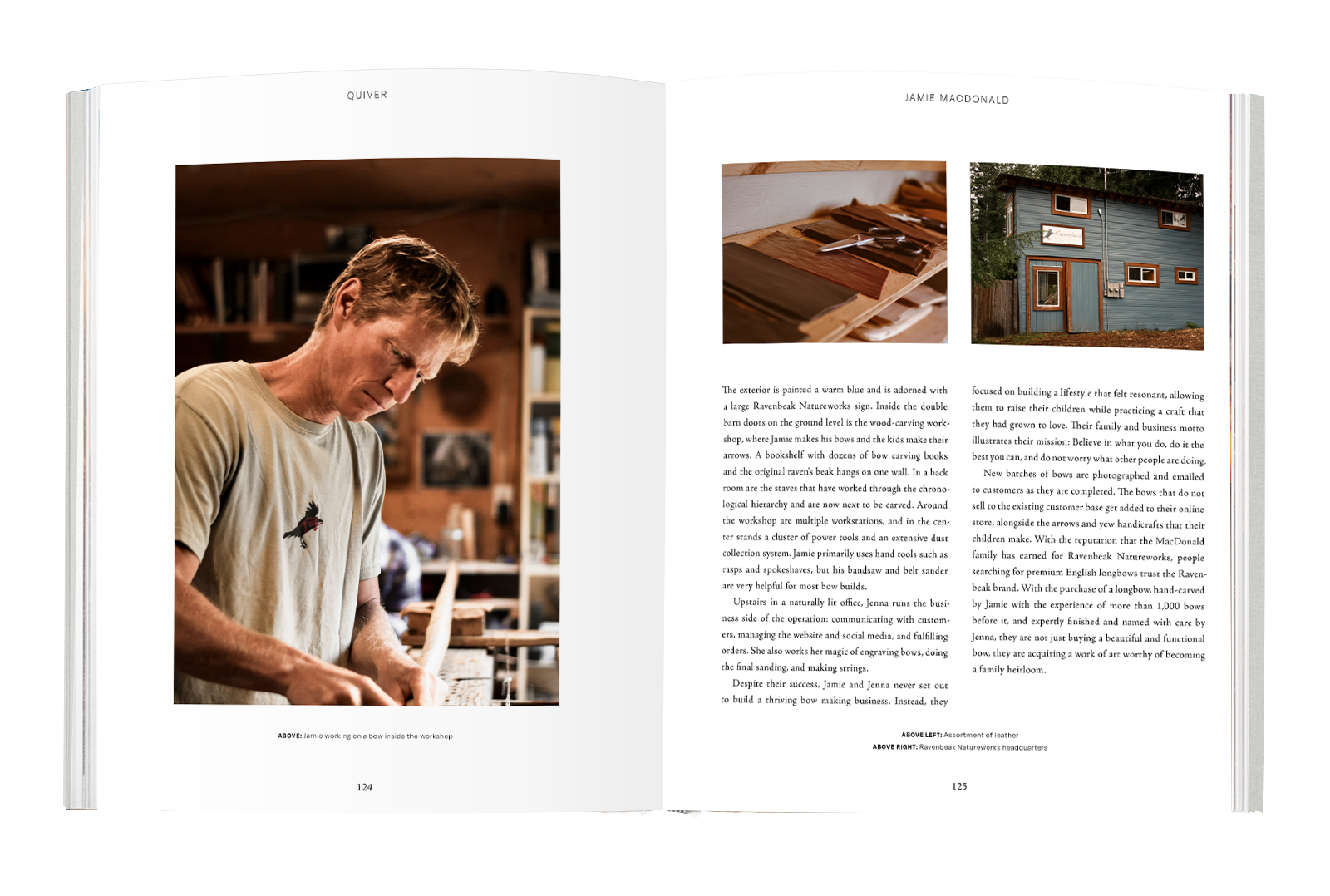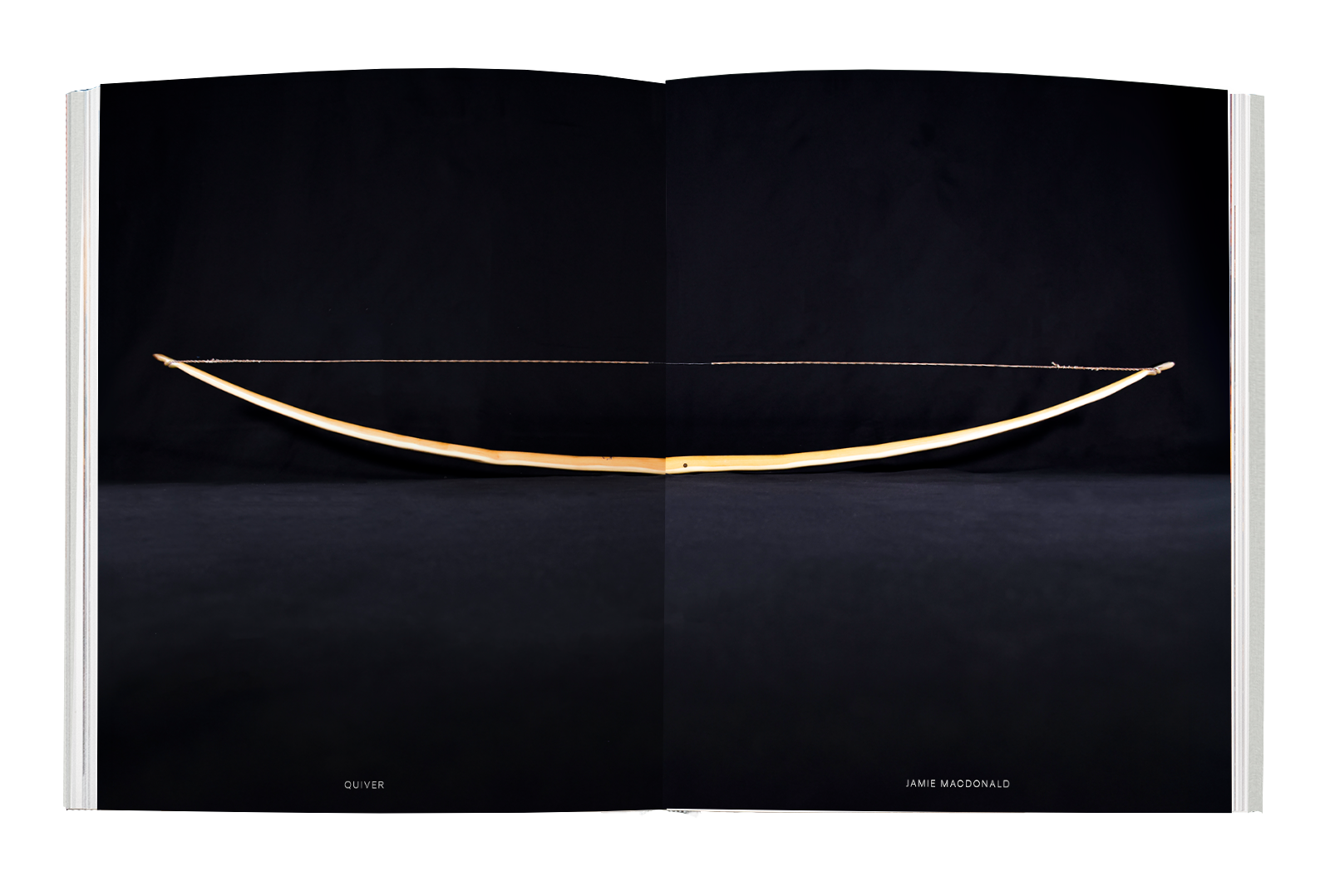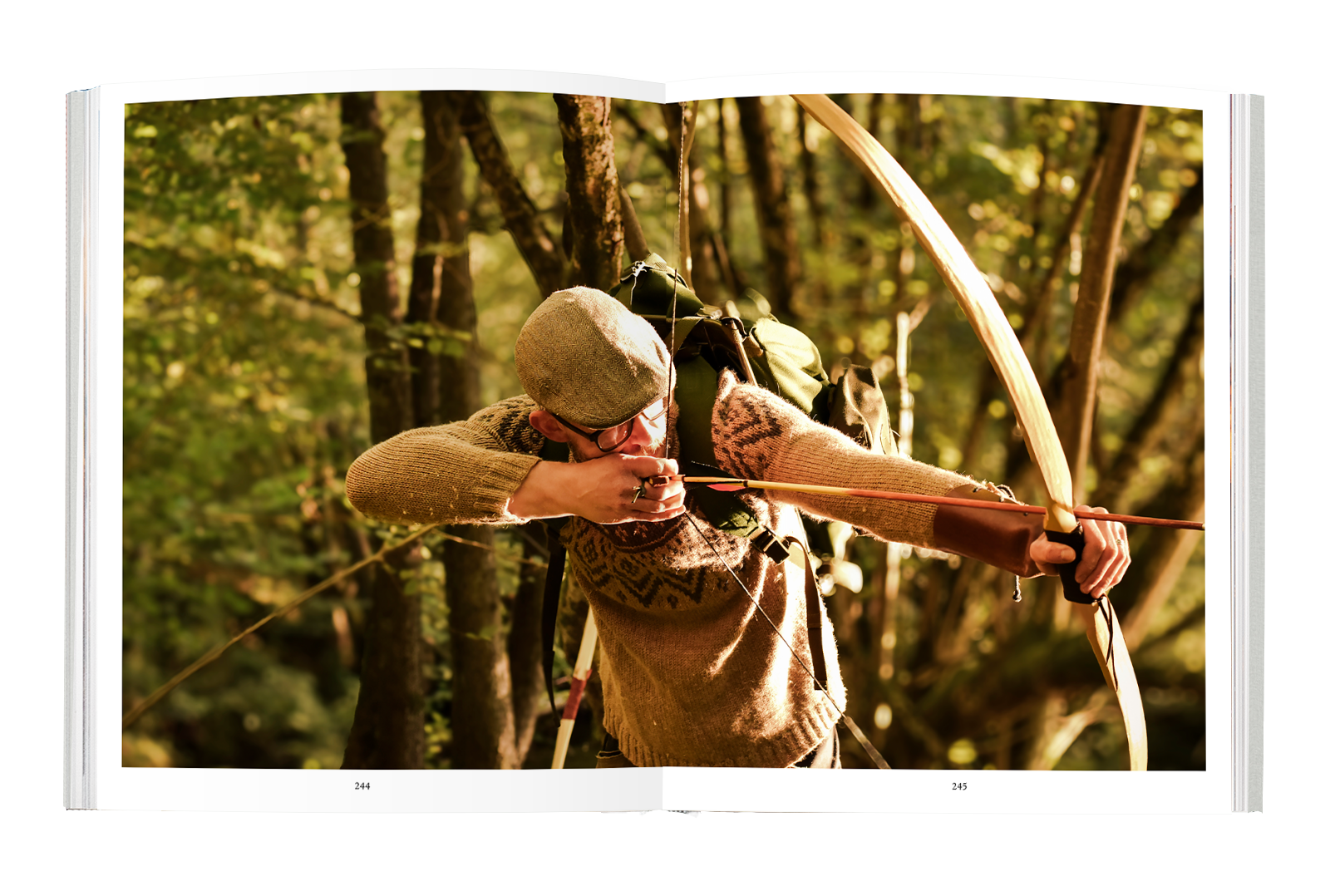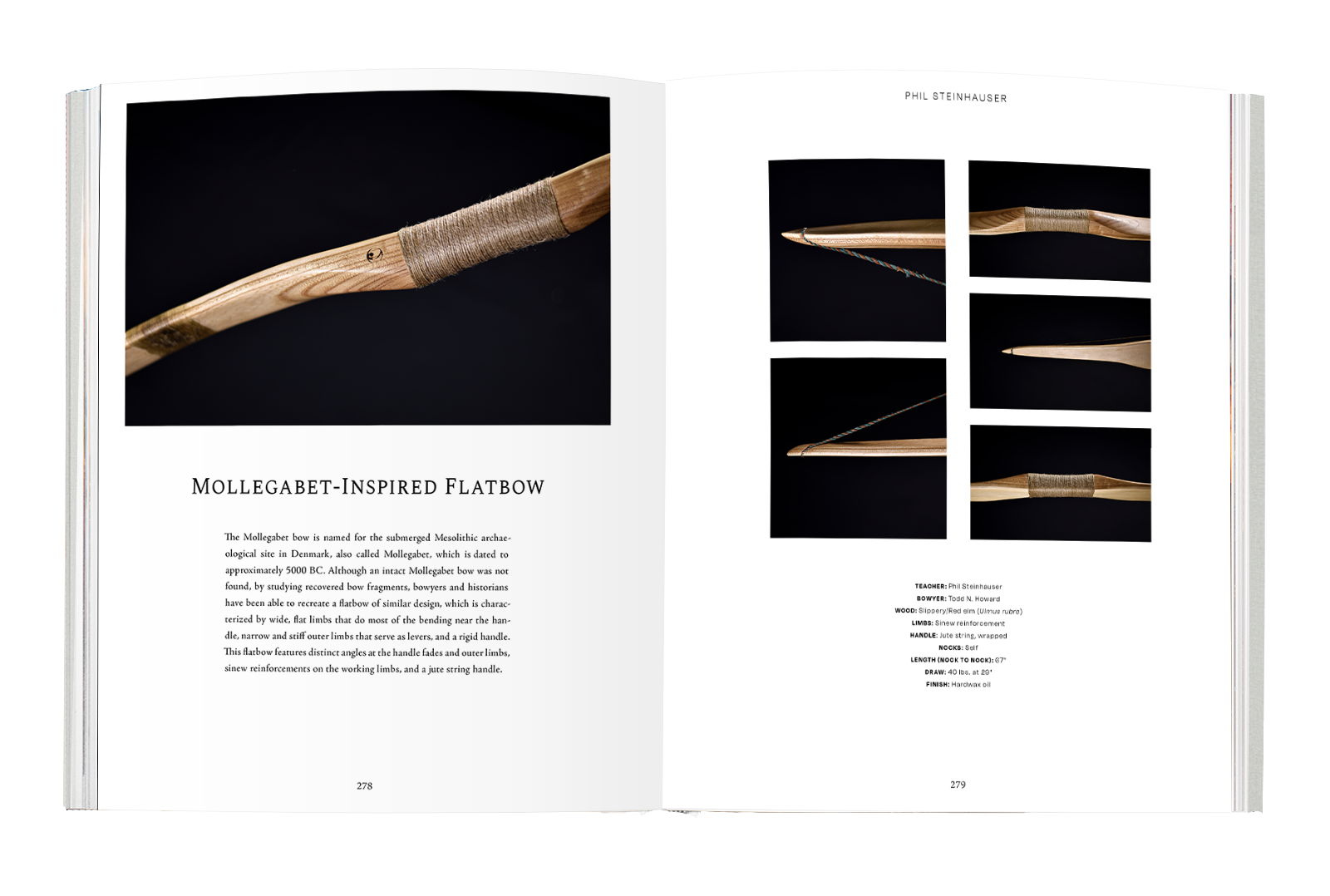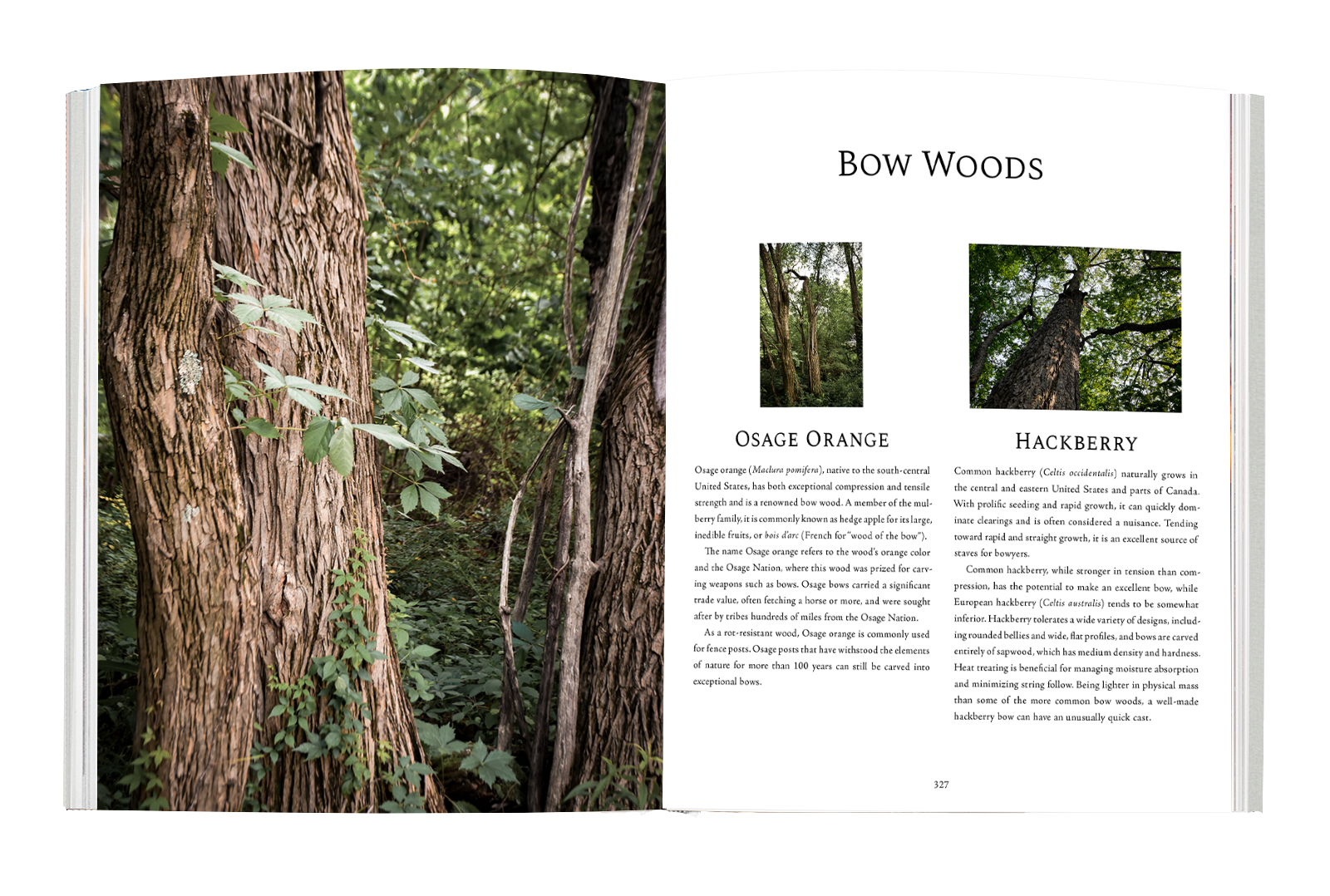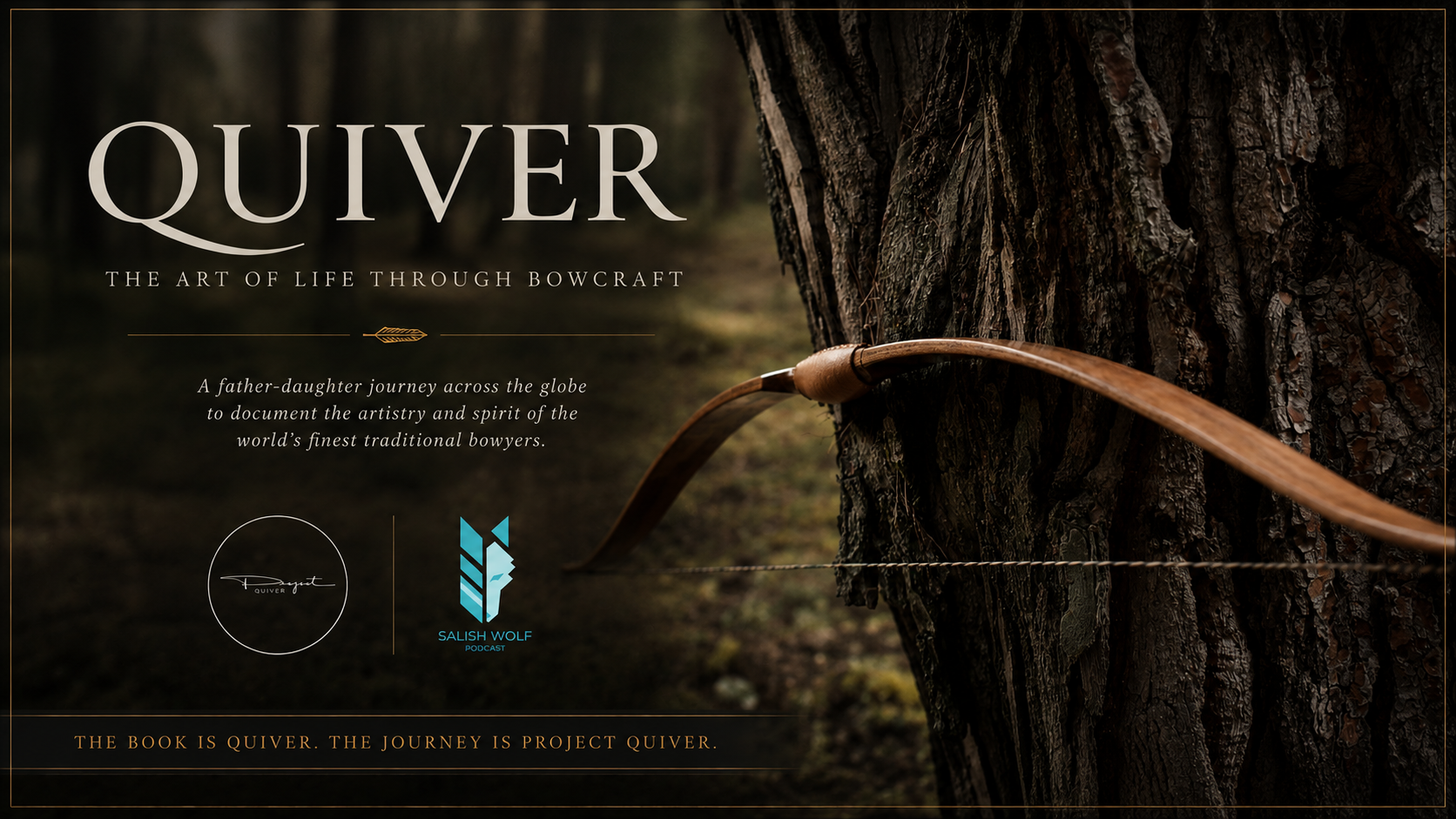
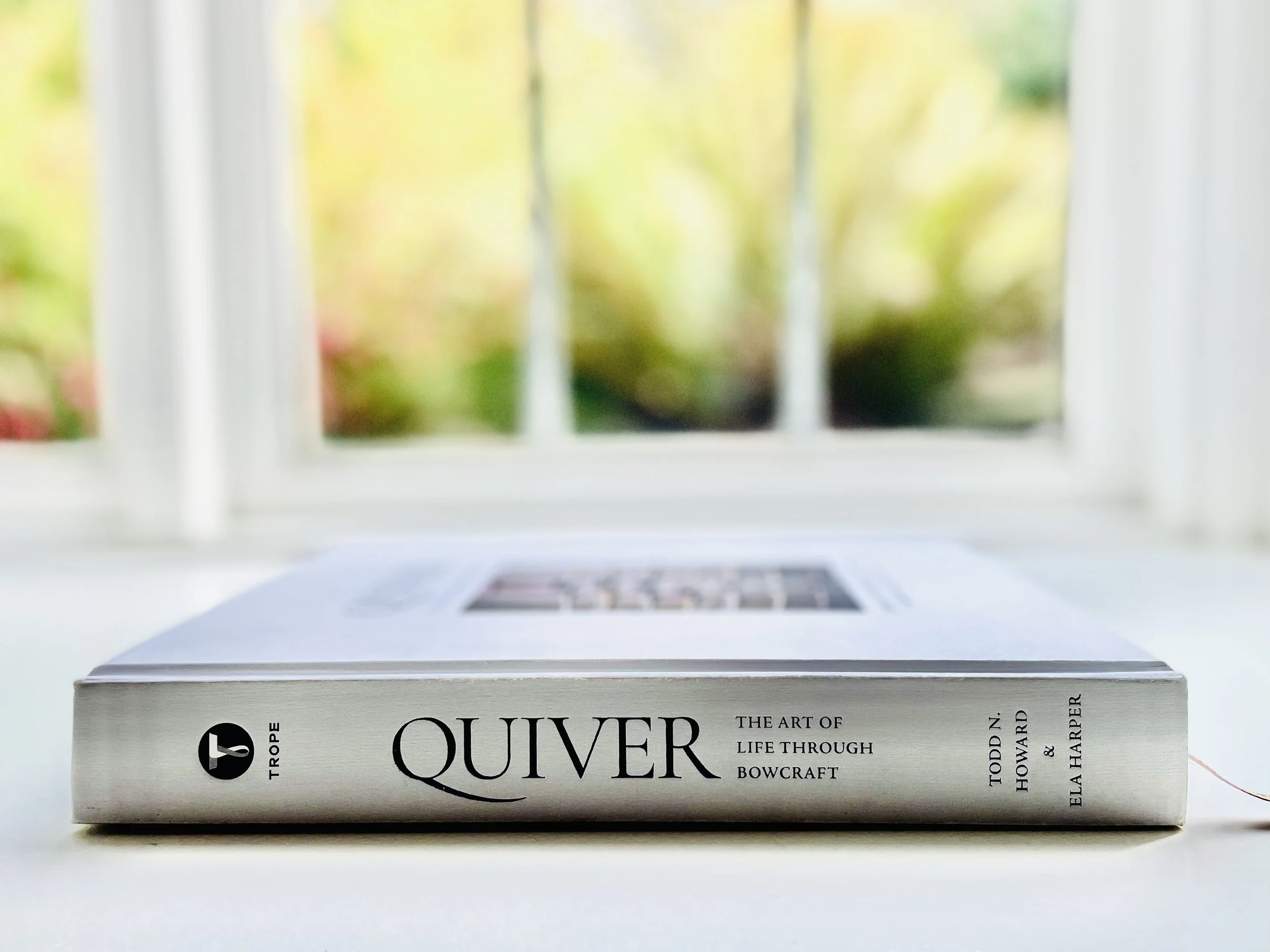
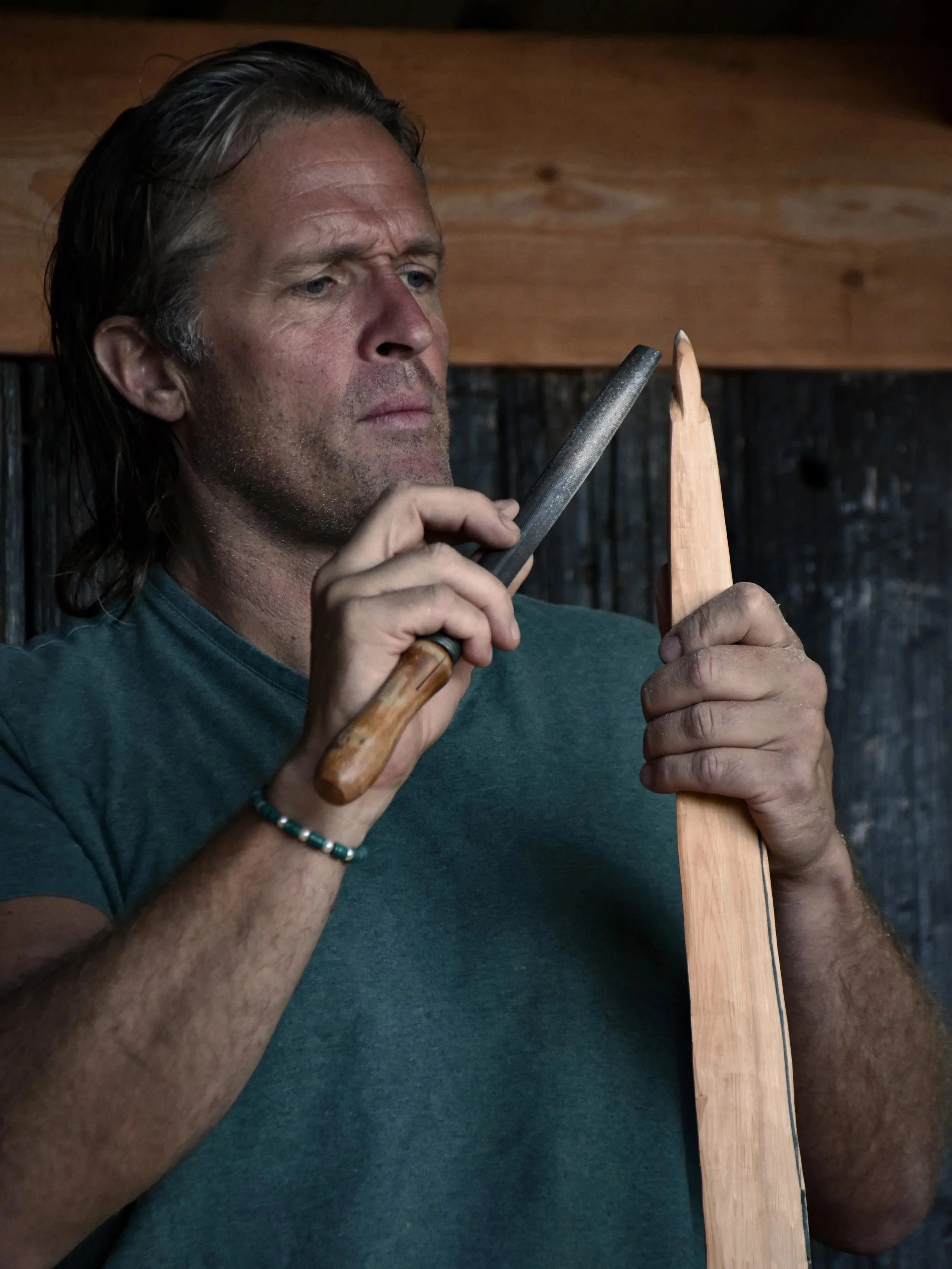
Project Quiver is the vision of father and daughter, Todd and Ela. Our mission was to travel the world interviewing and photographing 14 of the most distinguished bow carvers. With each bowyer, we spent several days in his workshop capturing his craft and story while also carving a bow under his guidance. The final product of Project Quiver is a stunning coffee table book known as Quiver: The Art of Life Through Bowcraft, which Trope will publish in Fall 2026.

Official launch sale begins here in June 2026!
Stay posted.

  • On the Fenwick Homestead, dawn spreads its nimble fingers as it emerges over the Bay of Fundy, touching the marshlands and railroad tracks that separate the Homestead from the Bay. Jake loves this place and the sanctuary it provides for him to be immersed in his craft of carving warbows and seeing how far they can fling his arrows. “The romance of it is going out into a field or a forest...the sun’s hitting the grass, there’s a nice breeze...It’s just you and something you’ve made—stick, string, arrow—and you shoot.”

    Excerpt from chapter with Jake Fenwick.

  • The two main work surfaces in his “laboratory” are cluttered with various tools, many of them unrelated to bowcraft. The search for the correct tool often takes minutes and a discerning eye. It is helpful that one of Chuck’s favorite tools is not a card scraper like many bowyers, but instead a disposable razor blade, dozens of which can be found under the shavings and rubble. With the tiny blade pinched between his thumb and index finger, he works with the efficiency of a Renaissance sculptor, removing wood with apparent randomness to the inexperienced observer, but always with exactitude and purpose. Shuffling debris, he returns to the tiller tree again and again, drawing on the bow with the fits and spasms of the pulley while identifying microscopic inefficiencies, twists, and weaknesses.

    Excerpt from chapter with Chuck Loeffler.

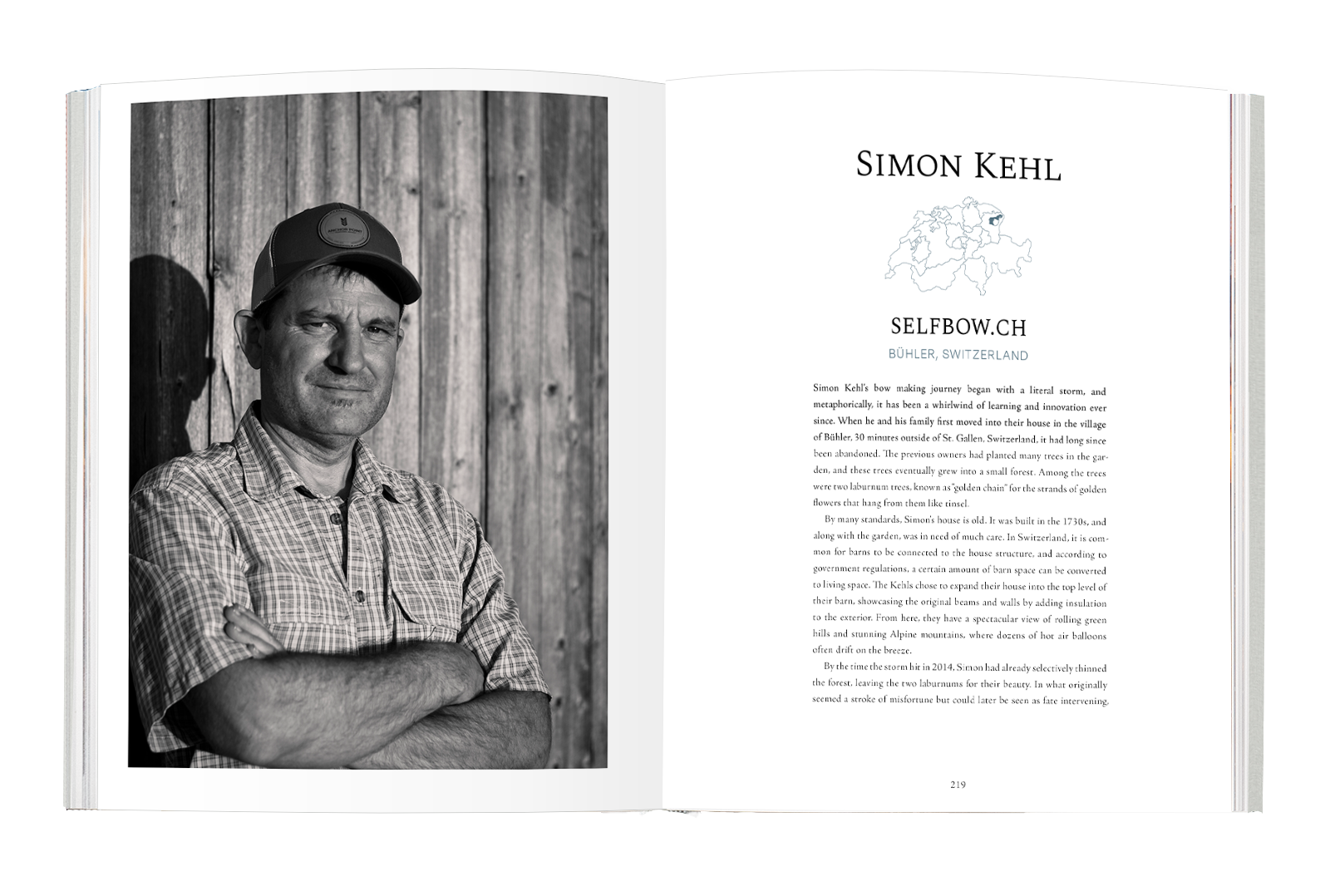
  • Solving the mathematical equation of a static bow is pretty simple, he explains. “But when it starts moving... it gets very difficult.” He says the equation that results in an arrow flying through the air with precision and speed is very complex and dynamic. “You can’t solve it by yourself,” he argues. Nor, he continues, can you fully solve it theoretically or with computer programs. The only solution he has found is to make a beautiful, aesthetically pleasing bow. “Maybe it sounds too simple,” he offers, “but a beautiful bow is a good bow and a good bow is a beautiful bow.” Simon says that without even stringing a bow, he can judge by the proportions and by the beauty whether or not it shoots well.

    Excerpt from chapter with Simon Kehl.

  • For Per, his connection to happiness and working outdoors with his hands cannot be overstated. He is a demonstration that lifestyle can be therapy, and therapy can be as elegant and powerful as poetry. Per’s poetry is written through the staves that he transforms into functional works of art and weaponry. He shows that healing need not be a deviation from the path but can be the path itself. The pursuit of perfection can never bring balance, but the pursuit of balance can be perfection. It’s the lagom way and the way of Per Fridén.

    Excerpt from chapter with Per Fridén.

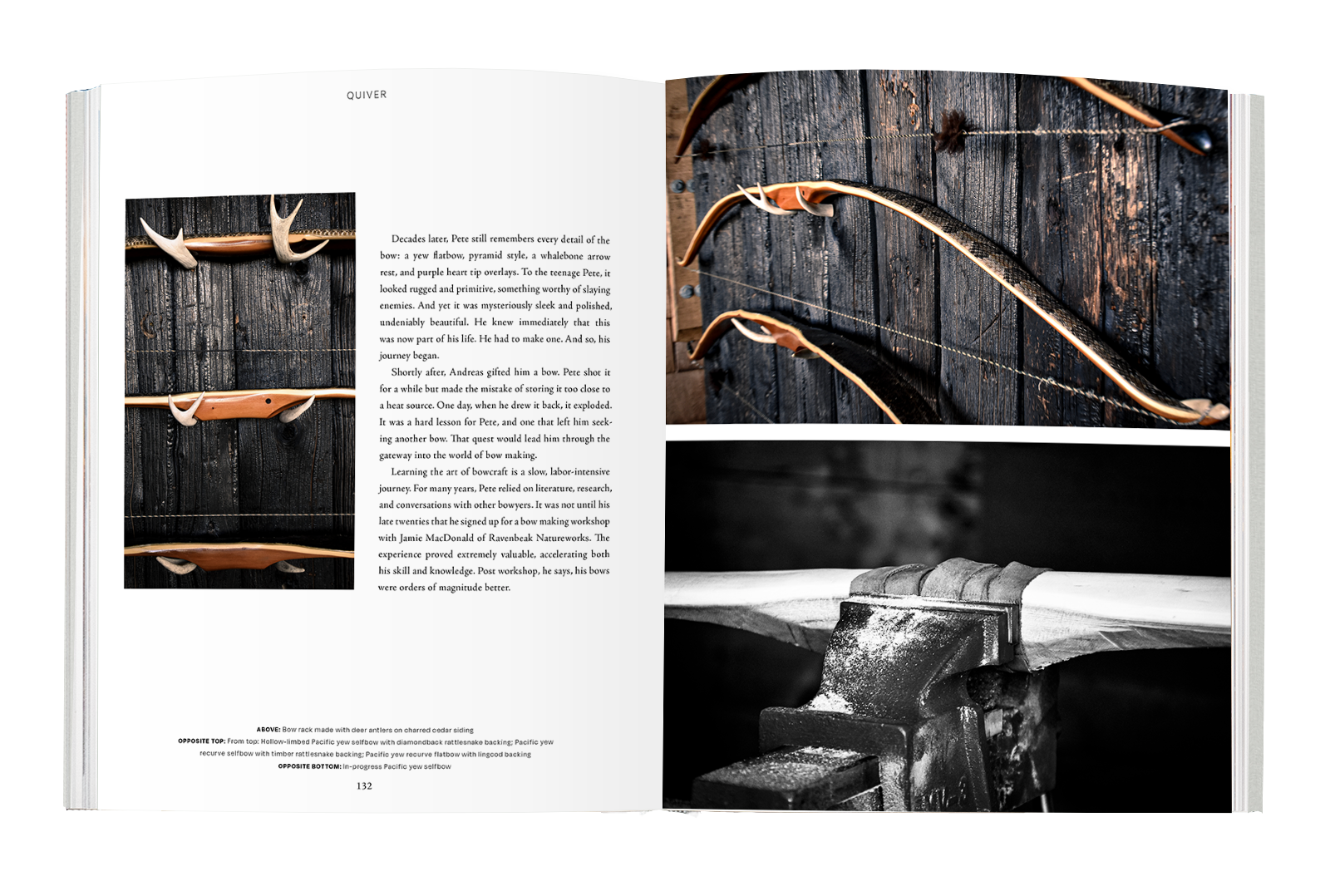
  • Decades later, Pete still remembers every detail of the bow: a yew flatbow, pyramid style, a whalebone arrow rest, and purple heart tip overlays. To the teenage Pete, it looked rugged and primitive, something worthy of slaying enemies. And yet it was mysteriously sleek and polished, undeniably beautiful. He knew immediately that this was now part of his life. He had to make one. And so, his journey began.

    Excerpt from chapter with Pete Woodland.

  • In northern Austria, just a flight shot away from the border of the Czech Republic, is a small village in the Waldviertel region. This is an area of vast farmland, big ponds and little lakes, and meticulously stacked firewood. The village has only a few dozen homes, the oldest of which dates back more than 250 years. It is the generational home of Erich Streichsbier and the headquarters of Sparrow Bows.

    Excerpt from chapter with Erich Streichsbier.

  • There I stood barefoot in the dirt on the brink of something that felt uncommonly significant, something that could fill the space left abandoned when my running identity was stripped away. And then, with my next breath, deliberate and slow, just like on countless mornings of my tai chi practice, I became part of this “new” thing, fully absorbed in the moment, right arm extended from my body toward the target, left arm drawing back the bowstring. At full draw, I paused, as if frozen in time and space, my breath full but unmoving, my focus finitely narrow. With the release of my first arrow and the soft thud as it penetrated the dirt 10 meters away, I had “returned”—to my roots, my body, my power. I exhaled the world. There was nothing more to be done, except to reload and shoot again, and again, and again. In that moment, I became an archer and knew, body willing, I would never stop being one.

    Excerpt from the Introduction.

  • That something as commonplace as a tree can be transformed into something as amazing as an archery bow can be explained by the cold logic of physics, but that cannot dampen the subliminal conviction that some kind of ethereal magic is at work.

    Excerpt from Foreword by Paul Comstock.

The book, Quiver, is the tangible product of Project Quiver, and the journey to create it is captured in detail through social media, podcasts, blogging, and our website. Our travels took us to bowyers in 8 countries, with many more countries along the way.
Follow our Instagram, YouTube, podcast, and blog.

Our Bowyers.

About us.

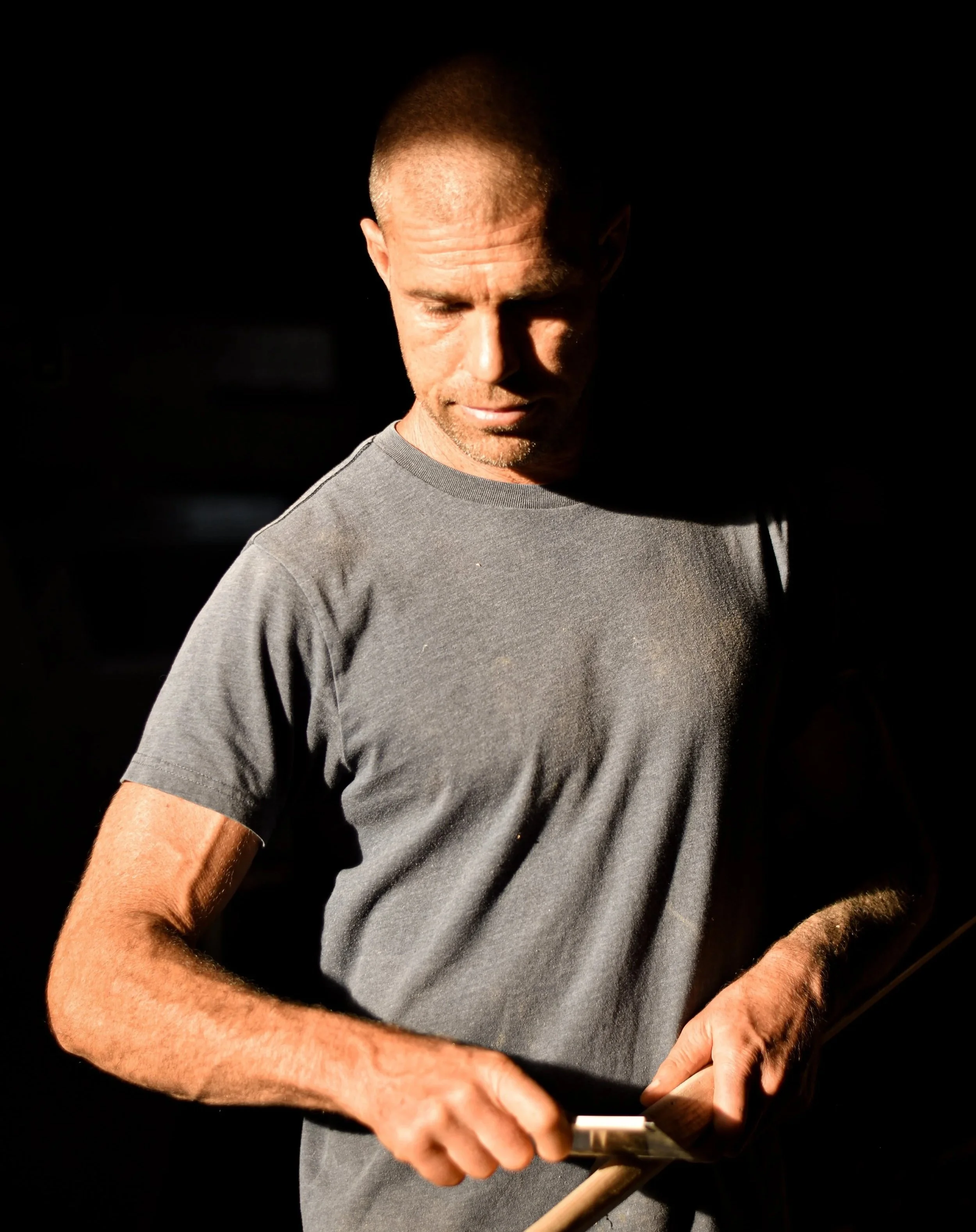
Todd Howard is a traditional archery instructor, acupuncturist, and martial artist. After spending 15 years serving as the president and founder of one of the world’s most recognized holistic medicine colleges in Canada, he now enjoys a lifestyle that includes daily surfing, skateboarding, and jiujitsu in Costa Rica. 


His path into traditional archery began a decade ago through a dedicated Qigong practice. What started as a meditative discipline soon became a deeper journey into the craft of bow carving. He began working with two master bowyers—both featured in Quiver—and now continues to carve in his Costa Rican workshop. 

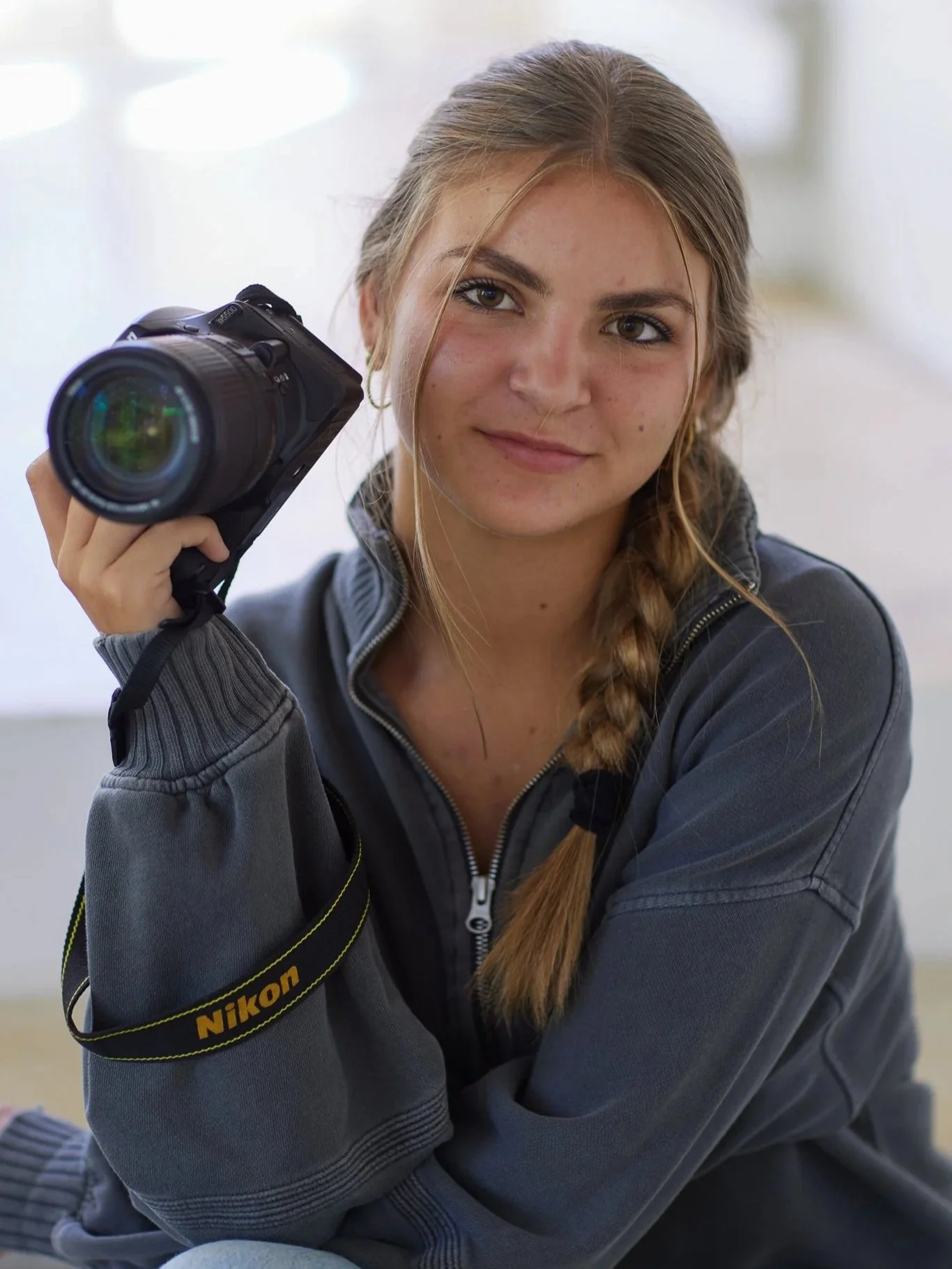
At just 15, Ela Harper is carving her own path—literally and creatively. She has traded traditional schooling for hands-on experience in photography, Brazilian jiujitsu, and travel.

Mentored by professional photographer Katherine Calnan, Ela is leading the social media vision for Project Quiver and capturing our global journey behind the lens.

When she’s not working on the book, Ela freelances as a photographer in Costa Rica.


Follow the Salish Wolf Podcast for interviews with the bowyers of Project Quiver
and many more.