
Available on these platforms: Spotify | Anchor | Apple | PocketCasts
#102 Hanno Börner on the Bowyers’ Dispatch

Next
Next
Available on these platforms: Spotify | Anchor | Apple | PocketCasts
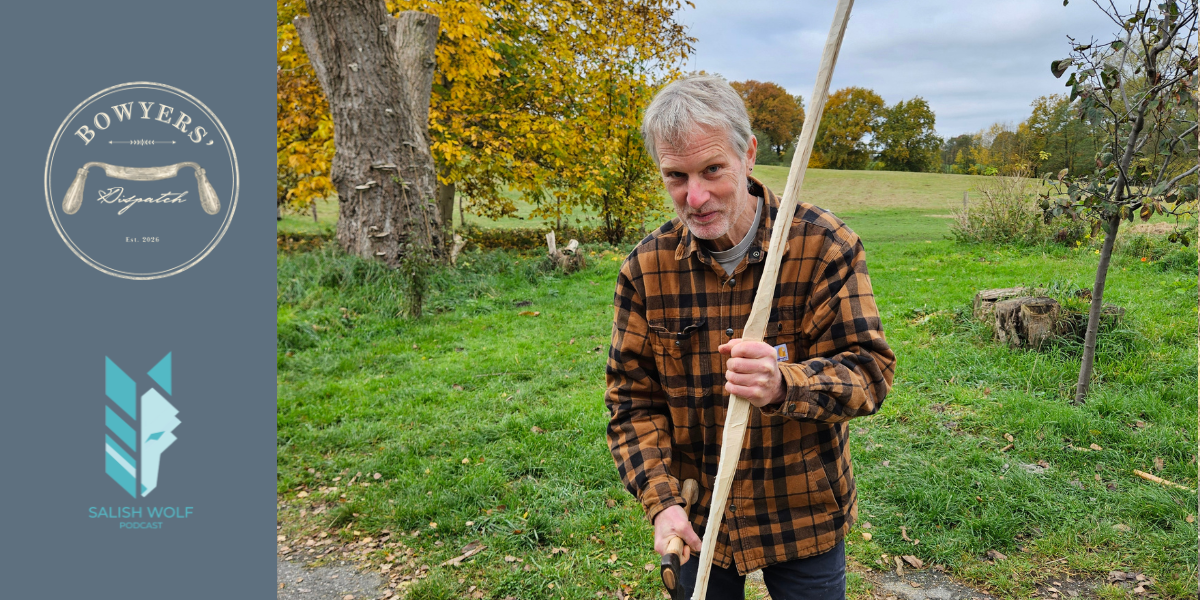
Hanno Börner is a bowyer and the owner of Bogenschule Stellmoor, an traditional archery school in Hamburg, Germany, where only bows of natural materials are permitted. Hanno and his wife have taught archery at Stellmoor since 2004, and teach about 120 youth during the summer.
“Now it’s quite normal that kids are going on their bike with with a quiver on their back and bow in hand, and everybody knows where they are going.”
Please enjoy this episode of the Bowyers’ Dispatch on Salish Wolf with Hanno Börner.
Episode Links:
https://www.stellmoorbogen.de/
https://www.instagram.com/hannoboerner
https://www.youtube.com/@stellmoorbogen7401
Quiver at Anchor Point Expeditions
Summary:
Bowyer and archery school founder Hanno Börner joins Todd to discuss teaching children with natural material bows, building traditional bows, and the history behind the Stellmoor name. Todd also shares his experience teaching archery in Costa Rica and experimenting with tropical woods, creating a practical conversation about craft, community, and how climate affects bow performance.
Show Notes:
Hanno and his wife have taught archery since 2004, growing from a small field to a school and range serving around 120 children in summer.
The range requires organic-material bows and arrows, with no fiberglass or carbon equipment; Börner builds bows and offers bow-building classes.
Children learn safety and responsibility through an archery-captain role, games, target practice, and rounds through a wooded course with 3D targets.
The Stellmoor name refers to nearby archaeological finds of arrow shafts with string notches, estimated at roughly 12,000 years old; no bow was conclusively identified.
Börner traces his path from childhood stick-and-string bows to bow making, describing traditional wooden self bows, bamboo laminates, and horn-composite bows.
He explains why bow-building classes need manageable materials and workpieces, and why hand tools offer quieter, cleaner work than power tools.
Todd describes bow failures in Costa Rica’s humidity and his experiments with local lemonwood and other tropical woods; Börner discusses seasonal stability and dense woods.
Chapters:
00:00 A natural-material archery school in Hamburg
02:52 From a small field to a growing club
06:08 Natural bows, bow building, and a workshop reset
09:14 How the school found its first students
12:11 Getting kids outdoors and earning neighborhood trust
15:09 Teaching safety through games and group roles
18:08 Play, meditation, and different reasons to shoot
20:59 The Stellmoor name and ancient arrow finds
23:59 A replaceable foreshaft from prehistoric archery
26:59 Hanno’s first bows and the pull of woodworking
30:14 Learning bow making through trial and error
32:53 Finding bow wood and developing as a craftsperson
35:56 From self-made bows to traditional archery
38:52 The range of bows Hanno builds today
41:56 Choosing materials for a two-day bow-building class
45:11 Why students need room to make mistakes
48:07 Leaving power tools behind for quieter handwork
51:05 Balancing craft, efficiency, and customers’ bow preferences
54:08 Inspiration from Dean Torges and the Bowyers Journal
57:12 The ambush bow challenge and a second-place finish
59:59 A damaged horn-composite bow and a hand-carved self bow
01:02:53 The crooked knife and its maker’s story
01:05:53 Greenwood tools and working wood before it dries
01:09:01 Finding Hanno’s work and the archery school online
01:12:02 Todd’s search for Costa Rican lemonwood
01:14:52 Tropical wood, humidity, and bow performance
01:18:04 Local woods and lessons from dense tropical species
01:20:53 Seasonal draw weight and closing reflections